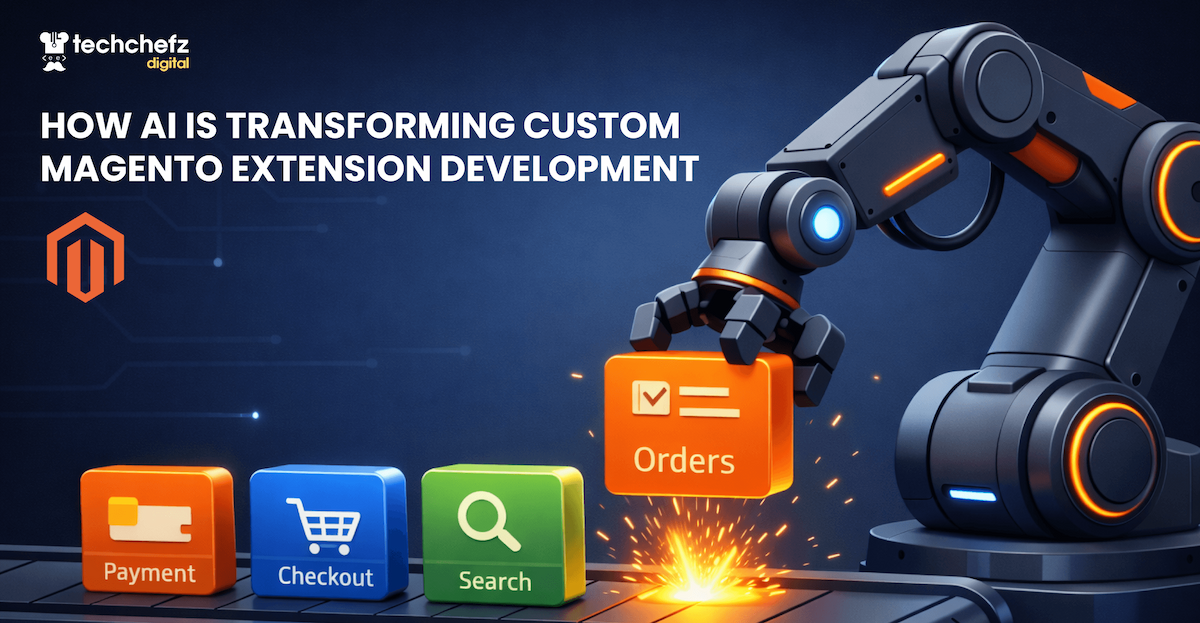
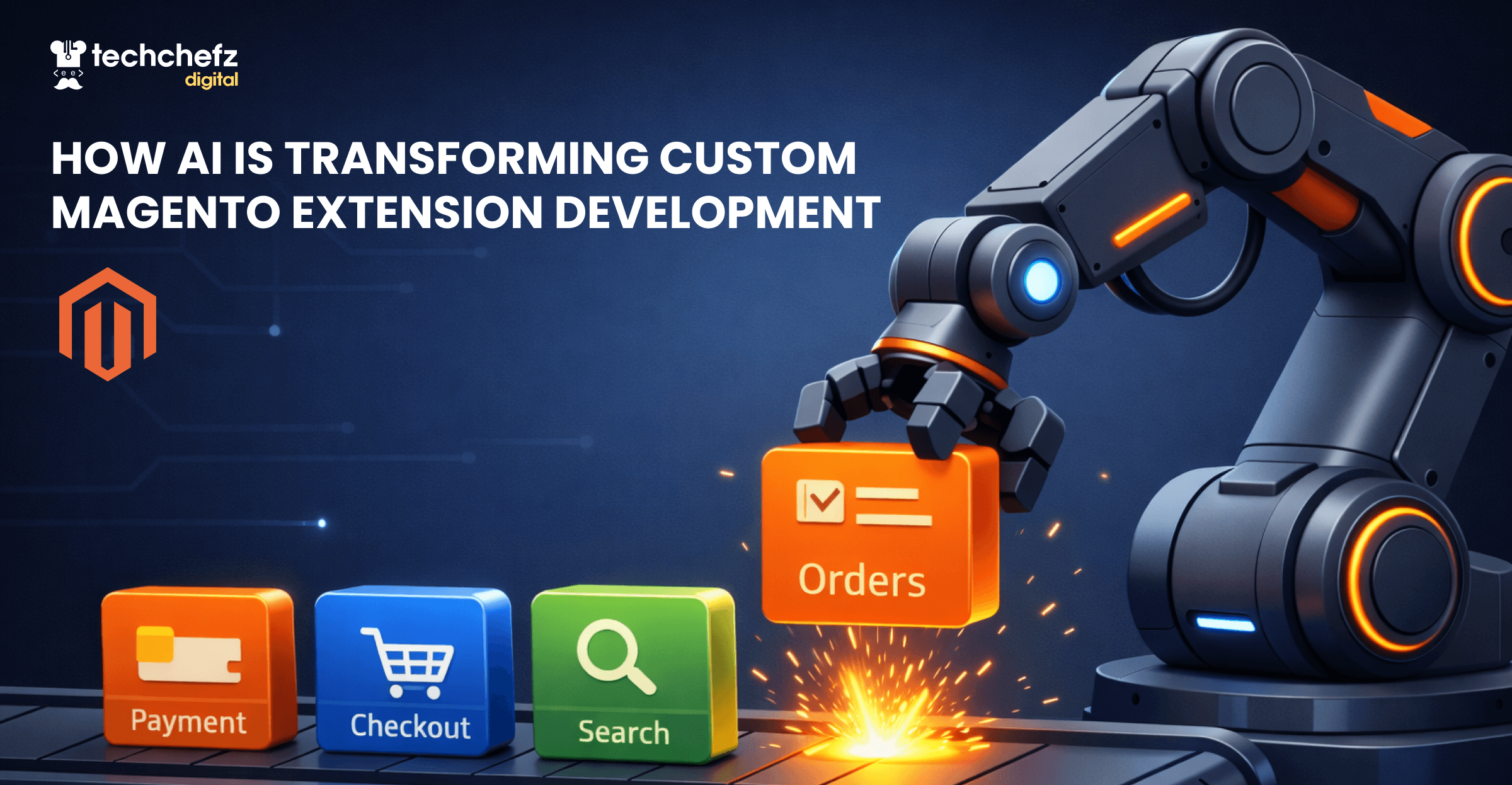
How AI is Transforming Custom Magento Extension Development
Published On
March 5, 2026
Author
Kunal Bhardwaj
Services
Overview
As eCommerce platforms handle increasingly complex operations, static, one-size-fits-all solutions are rapidly becoming obsolete. According to industry trends in 2026, the brands dominating the digital retail space are those integrating intelligent automation directly into their core architecture. For enterprises using Adobe Commerce (Magento), this means rethinking how custom features are built. This guide explores how Artificial Intelligence is fundamentally transforming custom Magento extension development—and why you must adapt to stay competitive.
AI: The Ultimate Developer Co-Pilot
Artificial intelligence is reshaping the very fabric of software engineering.
In Magento development, building custom extensions historically required extensive manual coding, rigorous testing, and lengthy QA cycles. Today, AI acts as a multiplier for developer efficiency.
AI accelerates development through:
- Automated code generation for boilerplate Magento architecture
- Instantaneous bug detection and refactoring suggestions
- Predictive modeling to foresee extension conflicts before deployment
But it’s not just about speed. It also enhances code quality:
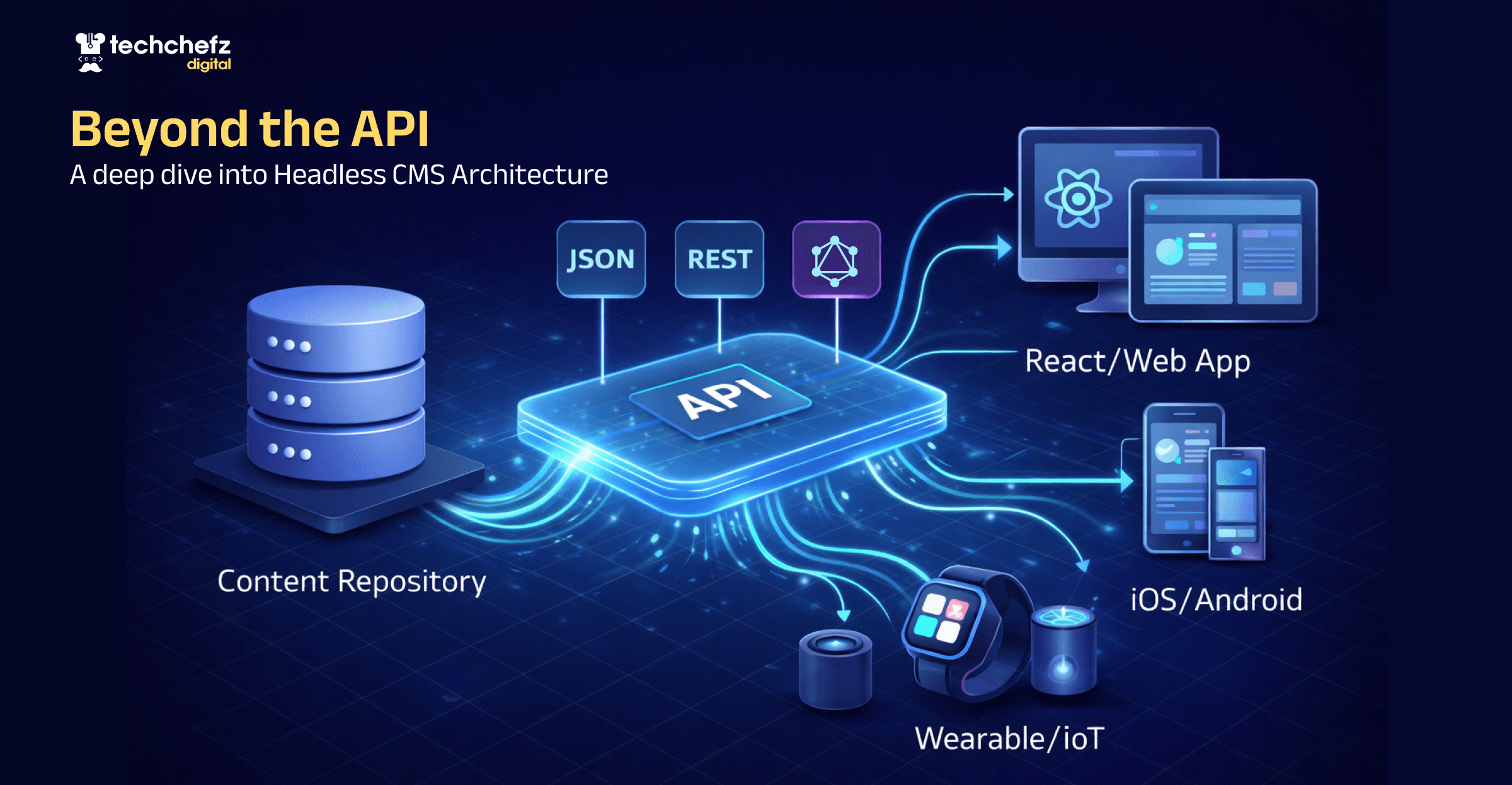
What’s Actually Inside a Headless CMS Architecture
- 1. A Structured Content Core Content is created as modular, reusable pieces, not pages. That means: Product descriptions reused across web, app, and portals Case studies adapted without rewriting Updates made once, reflected everywhere This structure is what gives headless CMS its scalability.
- 2. The API Layer (The Connector, Not the Hero) APIs expose content as data, usually JSON, so any system can consume it. But APIs alone don’t solve content chaos. They simply enable distribution. The real value comes from how content is modeled and governed before it ever reaches an API.
- 3. Decoupled Frontends for Speed Frontend teams are no longer constrained by CMS templates. They can: Build faster using modern frameworks Deploy independently Optimise performance without backend dependencies For B2B platforms, this means faster launches and fewer bottlenecks between teams.
- 4. Integration & Orchestration Layer This is where headless CMS becomes enterprise-ready. Content integrates with: Analytics platforms Personalisation engines CRM and CDP systems Search and recommendation tools Content doesn’t just publish, it responds. Why API-First Alone Isn’t Enough Many platforms claim to be headless because they expose APIs. But without: Thoughtful content modeling Clear workflows and governance Performance and caching strategies Teams end up with fragmented content and inconsistent experiences.
Hyper-Personalization Built into the Core
Third-party personalization plugins often slow down Magento stores by relying on heavy external API calls. In 2026, AI is allowing developers to build predictive intelligence directly into custom extensions. This means:
- Dynamic pricing models that adjust in real-time based on supply, demand, and user behavior
- Intelligent product recommendation engines trained specifically on your proprietary data
- Automate self-optimizing search functionalities
- Building AI directly into your custom extensions ensures high-speed, frictionless user experiences without the bloat of external SaaS integrations.
Intelligent Security and Anomaly Detection
Custom extensions are often the weakest link in eCommerce security if not coded properly.
AI is transforming how Magento modules secure themselves.
Modern custom extensions are now being developed with embedded AI monitoring that can:
- Detect unusual transaction patterns (fraud prevention) Identify malicious bot traffic attempting to scrape product data
- Self-isolate faulty processes before they bring down the entire storefront
Final Thought: AI in eCommerce is Strategic, Not Experimental
The evolution of custom Magento development makes one thing clear: AI-driven development is no longer a futuristic concept, it is a strategic necessity for high-performance eCommerce.
Leaders must plan for:
- AI-assisted rapid deployment of new features
- Deeply integrated, intelligent user personalization
- Self-monitoring and secure custom modules
- Reduced technical debt through AI-optimized code
Want to future-proof your eCommerce strategy?
At TechChefz Digital, we help organizations build intelligent, scalable, and AI-driven Magento solutions tailored to their unique market demands. Connect with us to elevate your Adobe Commerce platform and drive smarter digital growth.
OTHER INSIGHTS
Explore More of Our Insights





















DISCOVER MORE