Why AI Will Power Digital Engineering in 2026 and Beyond
Published On
Feburary 11, 2026
Author
Kunal Bhardwaj
Services
Overview
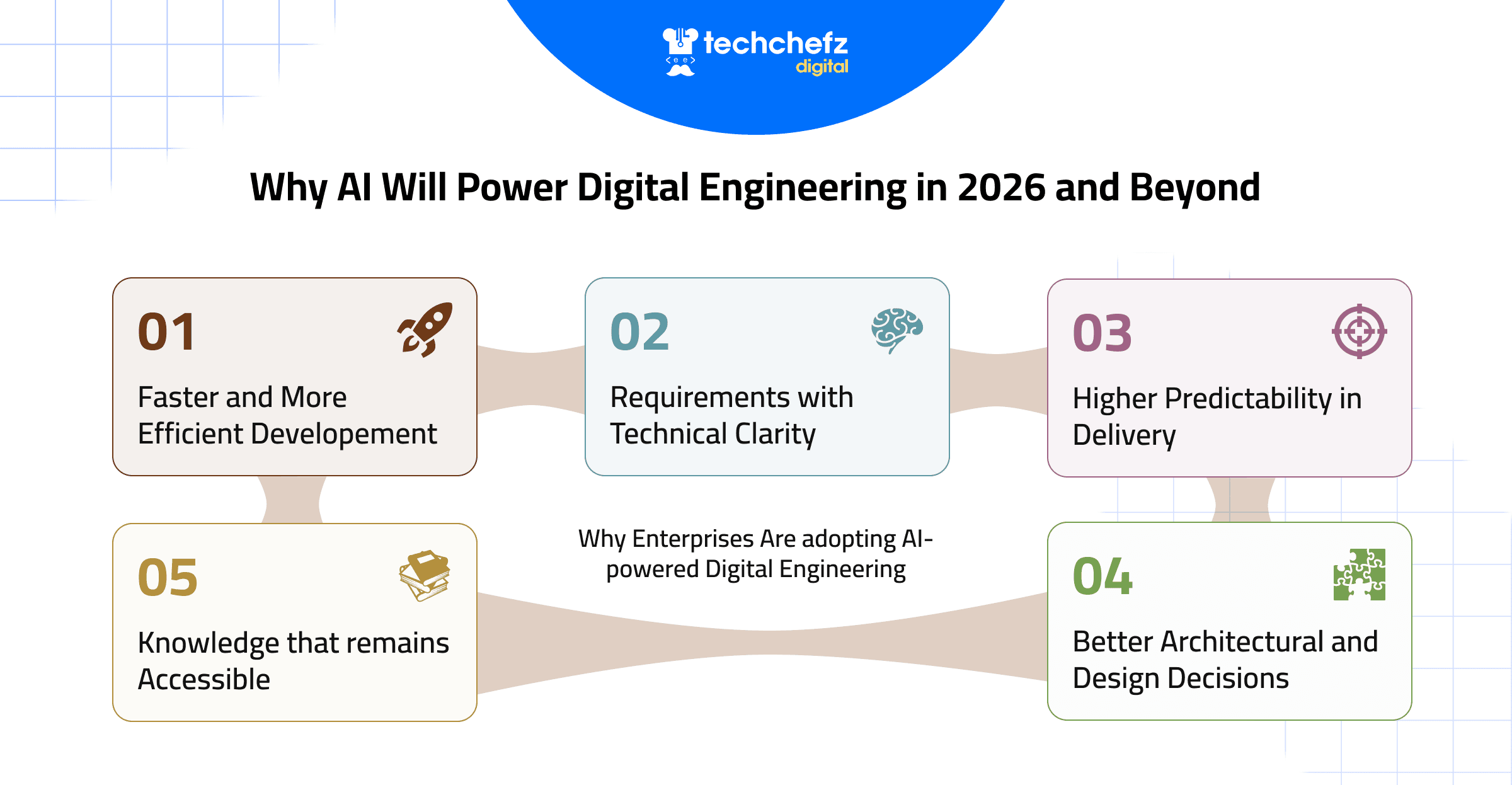
Digital engineering is no longer just about writing code faster or shipping features more frequently. It’s about building systems that can adapt, learn, and scale in real time. By 2026, AI won’t be something engineering teams experiment with on the side. It will sit at the core of how digital products are designed, delivered, and evolved.
From Engineering Tools to Engineering Intelligence
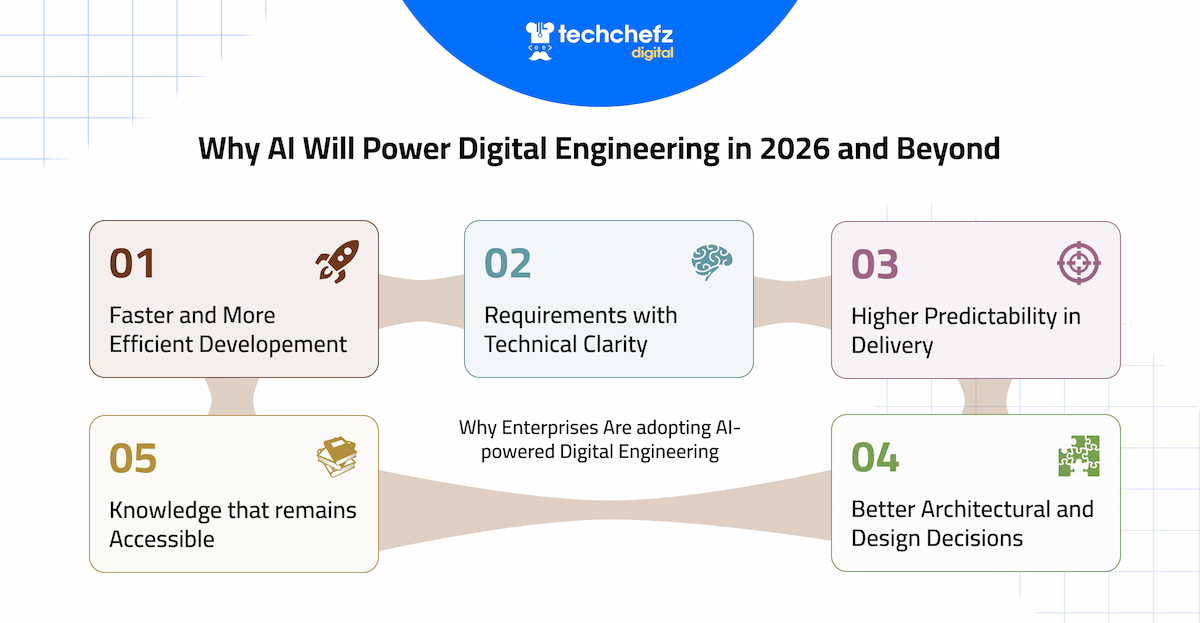
AI started as a productivity booster, autocomplete, code suggestions, faster documentation. That phase is ending. What’s replacing it is engineering intelligence: systems that understand patterns, anticipate failures, and guide decisions across the entire delivery lifecycle. Engineering workflows are no longer static. They are becoming responsive, contextual, and self-improving. This shift changes how teams build and what they focus on.
Productivity Scales Without Scaling Teams
Engineering velocity used to depend on hiring more people. In 2026, it will depend on how well teams leverage intelligence. AI reduces cognitive load by handling repetitive work, surfacing the right information at the right time, and shrinking the gap between problem detection and resolution. The outcome isn’t fewer engineers, it’s engineers spending more time on architecture, design, and innovation. Impact increases, without linear team growth.
Speed No Longer Comes at the Cost of Quality
For years, engineering teams had to choose between moving fast and staying reliable. AI dissolves that trade-off. With intelligent testing, predictive monitoring, and real-time insights, quality becomes part of the workflow, not a checkpoint at the end. Releases happen faster, incidents are detected earlier, and systems become more resilient with every iteration. Speed and stability stop competing. They start reinforcing each other.
DevOps Learns to Think, Not Just Execute
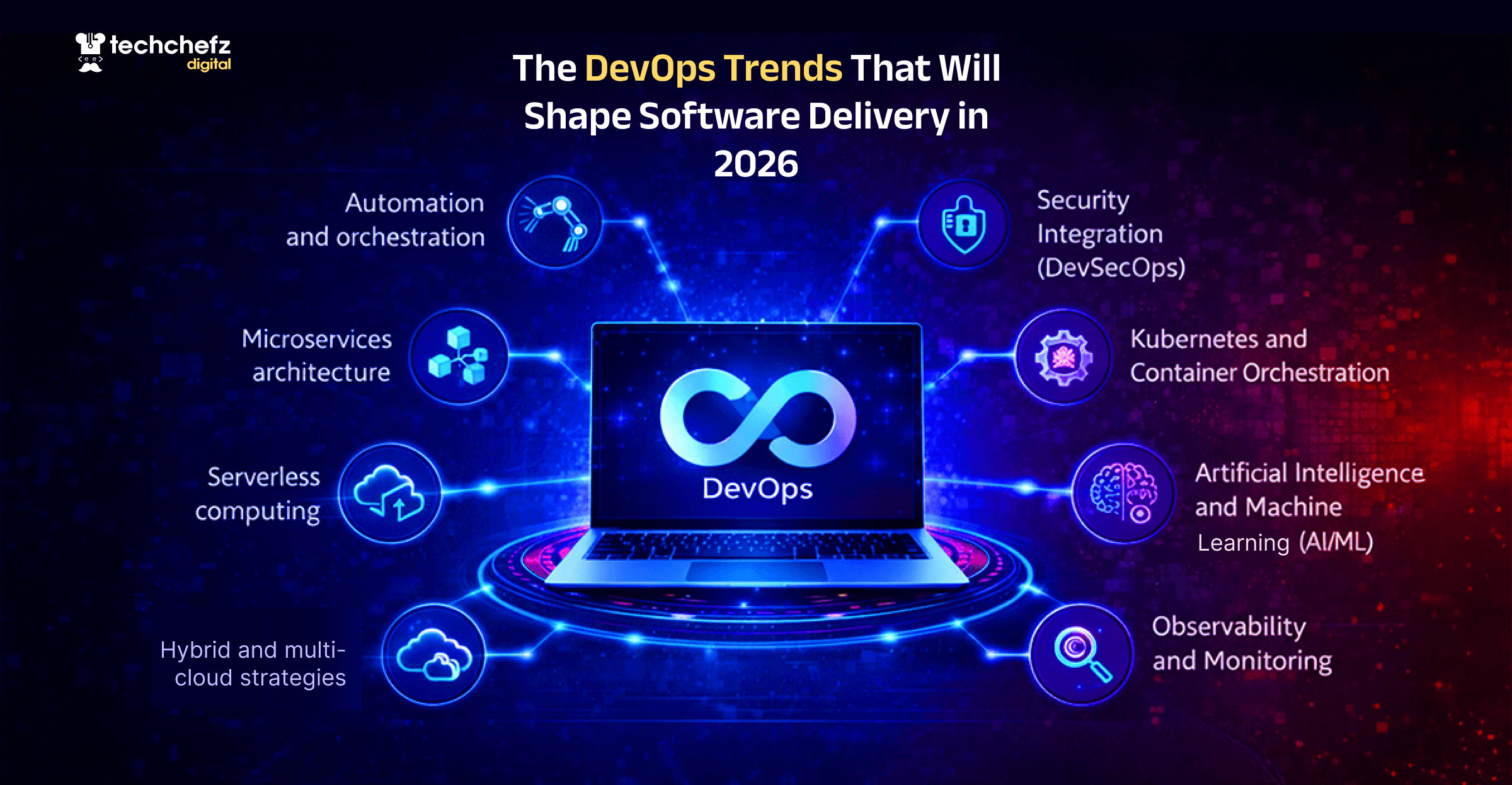
Automation was the first leap. Autonomy is the next. AI-enabled DevOps systems don’t just run pipelines, they interpret signals, assess risk, and take action. Deployments adapt to context. Infrastructure optimises itself. Incidents trigger responses before escalation becomes necessary. DevOps evolves from operational support into an intelligent control layer for digital systems.
Architecture Becomes the Real Differentiator
AI can only perform as well as the systems it operates within. In 2026, engineering platforms will need to be modular, API-first, cloud-native, and observability-driven. Architecture becomes less about control and more about adaptability. Teams that invest in AI-ready foundations will unlock speed, resilience, and long-term scalability. Those that don’t will remain stuck in experimentation mode.
Where TechChefz Digital Fits In
At TechChefz Digital, we help organisations move from AI curiosity to AI-powered digital engineering. Our focus is on embedding intelligence across architecture, DevOps, delivery, and quality, not as add-ons, but as foundational capabilities. We build engineering ecosystems designed to learn, adapt, and scale with business ambition.
Final Thought
By 2026, digital engineering won’t be defined by how much you build. It will be defined by how intelligently your systems evolve. AI won’t sit on the sidelines. It will run the engine.
OTHER INSIGHTS
Explore More of Our Insights

































DISCOVER MORE