Unlocking AEM Content Fragments: The Secret to Flexible, Reusable, Channel-Agnostic Content
Published On
January 8, 2026
Author
Rahul Aggarwal
Services
Overview
Content is the currency of digital experience, but how you structure and deliver that content determines agility, consistency, and scale. In the world of Adobe Experience Manager (AEM), Content Fragments are a powerful approach to managing content once and using it everywhere, regardless of layout or channel. This makes them foundational to modern, headless content strategies.
What Are AEM Content Fragments?
At their core, Content Fragments in Adobe Experience Manager are page-independent pieces of structured content. Unlike traditional page content tied to a template and layout, content fragments are purely content-centric, meaning they contain text, metadata, and structured fields without any design or presentation constraints.
The structure of a Content Fragment is defined by a Content Fragment Model, which acts like a blueprint for the type of content it can contain, from simple text to structured data types like dates, numbers, references, and more.
This makes Content Fragments ideal for channel-agnostic delivery, especially in headless architectures or multi-touchpoint digital ecosystems.
Why Content Fragments Matter in Modern CMS Strategies
- 1. Channel-Agnostic Content Delivery Content Fragments store content independently of how it’s presented. This means the same content asset can be delivered to: Websites Mobile apps IoT devices Third-party platforms …without rewriting or recreating the content for each channel. This is a core advantage in headless CMS models where the backend content must travel to multiple front ends.
- 2. Consistency & Reuse When you update a fragment in AEM, that change propagates to all instances where it’s used. This dramatically reduces errors, minimizes duplication, and ensures consistent brand messaging across digital touchpoints a hallmark of scalable content operations.
- 3. Structured Content Empowers Personalisation Structured content — where data follows a predefined schema — can be easily consumed by APIs, third-party apps, or personalization engines. This makes AEM Content Fragments a strong foundation for automated, context-aware experiences and customer journeys.
Content Fragments vs. Experience Fragments
A common point of confusion is the difference between Content Fragments and Experience Fragments:
- Content Fragments focus on pure content, text, structured data, and metadata without layout.
- Experience Fragments are page structures that include both content and design/layout elements for fully defined sections of a digital experience.
- Use Content Fragments for flexible, reusable data that can power multiple presentations.
- Use Experience Fragments for sections of pages (like hero banners or footers) that need consistent layout and design.
How Content Fragments Work in AEM
Content Fragments are typically created and managed through either: The Content Fragment Console — a centralized interface for creating, editing, and publishing fragments; The Assets Console — where fragments are treated as assets and can be tagged, versioned, and grouped for governance. Once created, Content Fragments can be: Dragged into AEM pages via the Content Fragment component Exported as JSON using the Sling Model and delivered to headless clients Used across digital channels without duplication
Top Use Cases for AEM Content Fragments
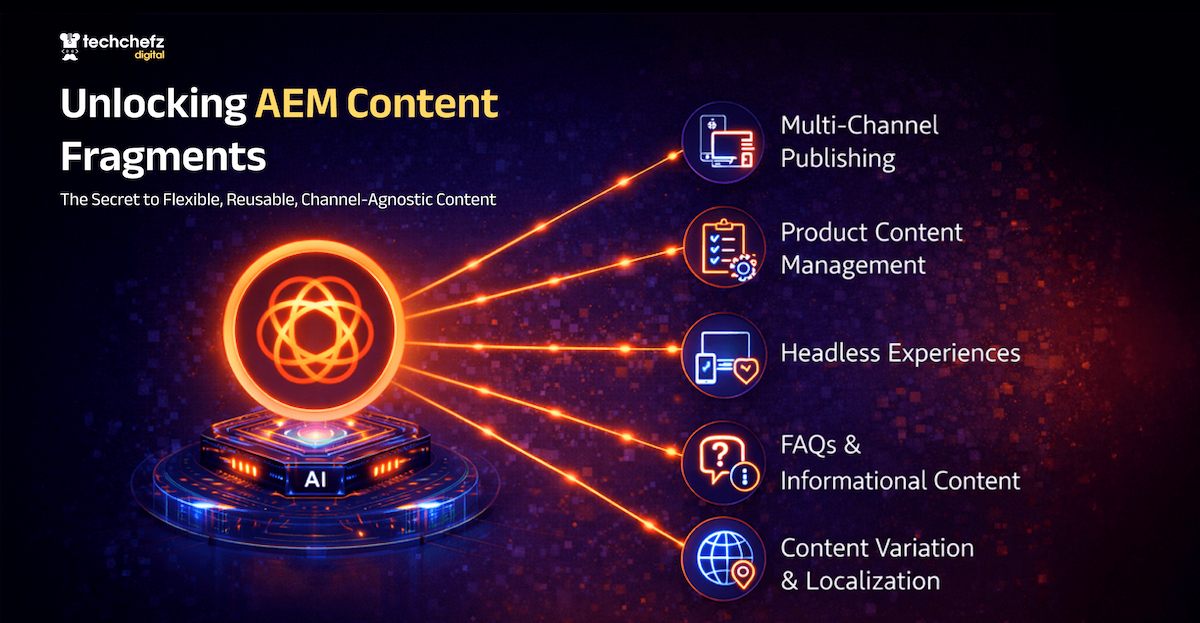
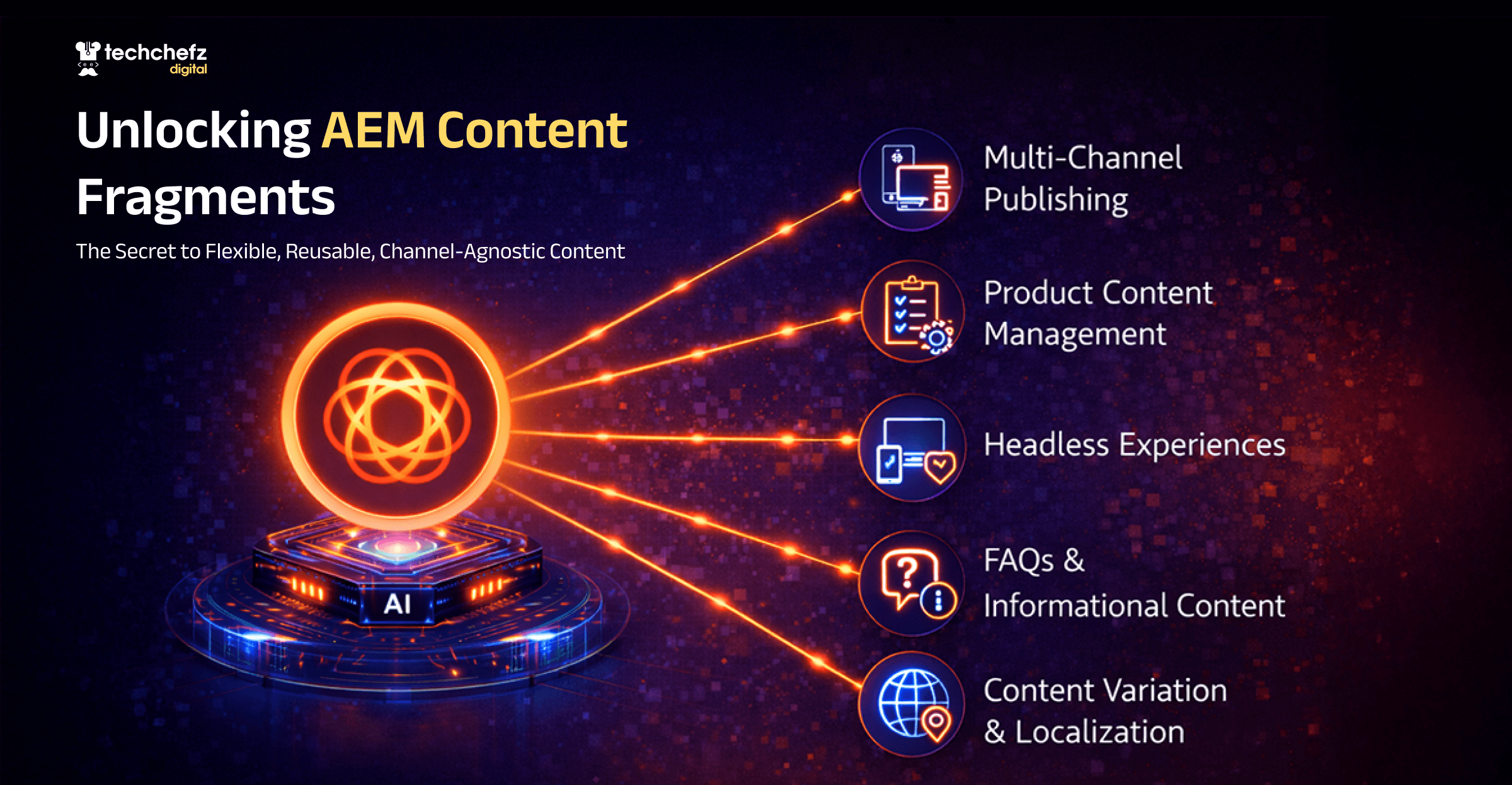
- 1. Multi-Channel Publishing Publish the same structured content across web, mobile, kiosks, and third-party apps without duplicating work.
- 2. Product Content Management For e-commerce or product catalogs, Content Fragments allow you to maintain product descriptions, specs, and metadata centrally while exposing them wherever needed.
- 3. FAQs & Informational Content Common informational blocks like FAQs, bios, and press releases benefit from being authored once and tailored to different channels via variations.
- 4. Headless Experiences Because content fragments can be delivered via JSON for headless front ends, they are perfect for decoupled architectures and SPA (Single Page Application) models.
- 5. Content Variation & Localization With built-in variation support, Content Fragments enable different content versions for region, language, or campaign without separate management silos.
Conclusion: AEM Content Fragments: Flexible, Future-Ready Content
Content Fragments are more than a feature, they’re a content strategy enabler. By separating content from presentation, organisations can achieve:
- Faster content delivery
- Greater reuse and consistency
- Efficient multi-channel publishing
- Headless flexibility
- Personalisation-ready data structures
Get in touch with TechChefz Digital and discover how we’re helping enterprises craft intelligent, personalized, and scalable experiences. 📩 [email protected] 🔗 www.TechChefz.digital
OTHER INSIGHTS
Explore More of Our Insights
































































DISCOVER MORE